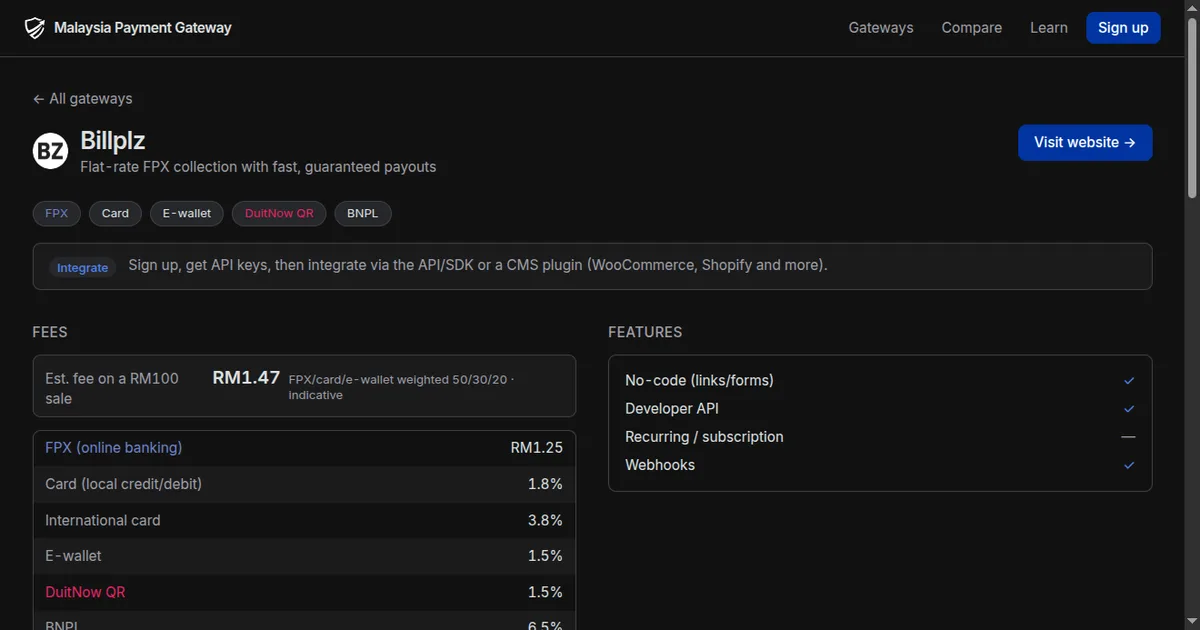
Billplz is one of the names Malaysian SMEs reach for first, and its pricing is genuinely simple: a flat ringgit fee for FPX, a percentage for everything else, and nothing upfront. Here is the whole structure, and where it does and does not make sense.
How Billplz pricing works
Billplz runs two plans. Basic is free: no setup fee, no monthly fee, you pay per transaction only. Premium is a paid annual membership whose only purpose is lowering your FPX rate.
The rates that matter, from the official pricing page:
- FPX (B2C): RM1.25 flat per transaction on Basic, RM0.75 on Premium.
- FPX (B2B): RM3.00 on Basic, RM2.00 on Premium. B2B means the payer uses a corporate banking account, and most stores never see these.
- Local cards (MYR): 1.8%.
- Non-MYR cards: 3.8%, with payout at T+2.
- E-wallets: 1.5%.
- BNPL (3 to 4 month plans): 6% to 6.5%.
The flat FPX fee is the headline. A percentage-based gateway gets more expensive as your ticket grows; RM1.25 on a RM500 invoice is 0.25%. On small tickets the logic flips: RM1.25 on a RM15 sale is over 8%, and a percentage-based rival wins. You can test your own ticket size in the fee calculator.
When the flat rate wins
Billplz suits invoice-style collection with meaningful ticket sizes: tuition fees, club memberships, agency invoices, event registrations. That is also why its tooling leans toward bills and payment links rather than storefront checkouts, with plugins for WooCommerce, Shopify, OpenCart, Magento, PrestaShop and WHMCS when you do run a store.
Two honest caveats. First, there is no card-on-file recurring billing, so subscription businesses should look at the recurring-capable gateways instead. Second, the BNPL rate is on the high side; if instalments matter to you, compare the BNPL providers directly.
Settlement and the fine print
FPX money lands the next business day (T+1), and Billplz markets that payout as guaranteed. Cards take an extra day (T+2). There is no minimum transaction amount, and the current published rates carry no hidden add-on fee per transaction.
The numbers in the box above render from the same verified dataset as the whole directory, so if Billplz changes its rate card, this page changes with it. For the side-by-side view, see Billplz vs toyyibPay or the full Billplz profile.